Academics
MMS 173 Assignment #2: Knowing Where You're At (Part 2)
Part I: General Assessment
A photo isn’t just about the aesthetics, it’s the memory that it captures. This is something that the majority of people in this class believe about photography. Upon looking into more than 15 e-portfolios from my classmates through random selection, I have come to a conclusion that the majority in class consists of beginner to competent level photographers, while professionals and proficient photographers being the minority. Though, this only means that they treat photography as a hobby less as a profession. Contrary to what people usually think first when they describe beginners, most of the photos I’ve seen were actually good, even with a normal phone. They understand basic concepts of photography such as proper spacing, alignment and lighting, and the ability to implement average techniques of composition (especially with linear/symmetrical compositions). However, as I read through the 1st Unit, I began to notice the irregularities. A common issue that I encountered with the class’ photos was balance. If not uncentered, it’s tilted significantly towards the other side. Most of the photos also do not have proper spacing between both sides of the center —which I am also guilty of doing— making it harder to implement the principle of balance and direction in which the elements should lead the eye.
But, then again, it’s the stories behind every shot that matters most. Skimming through my classmates’ works, I’ve seen tons of photos that hold much more meaning than just a simple “birthday cake on the table” or “a person smiling towards the other side”. It amazes me that some of my classmates have gone through so much but still hold on to the brighter side of things, making their photos look vibrant, instead of the gloom that almost always represents pessimism.
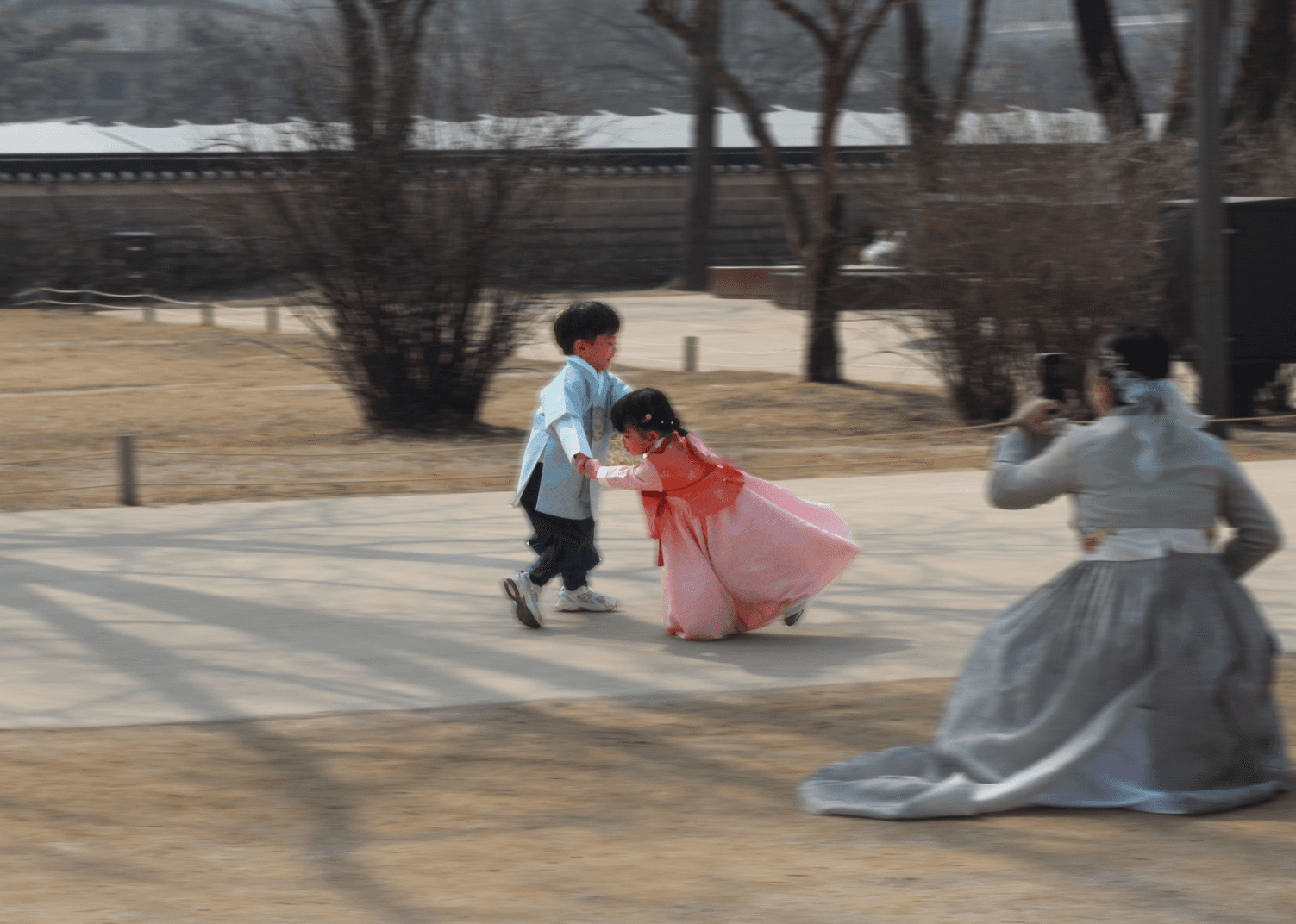
Though, if we’re going to talk about the ‘best’ photos I’ve seen among my class’ e-portfolio in terms of concept and composition, it would be Clarizza Olivo.Their ‘galaw-hinto’ piece really caught my eye as they used lower ISO and slower shutter speed to make blurred motions while leaving the center in focus (as shown in the image below).
Clarizza Olivo’s “galaw-hinto”
Their understanding towards the different techniques and concepts that are usually difficult for beginners, such as myself, made their works stand out from the rest. Instead of just simply clicking right away once set on a subject using auto-focus, it seems that they manually cook up recipes in order to make their photos unique and recognizable.
Aside from who stood out, so far, I don’t think anyone is really behind in this class. Everyone has their own potential, it just needs some time to practice and get used to the ways in which photography works.
Part II: 5 Photos to Critique
Marie Claire Dela Cueva - “No Title”

This photo brims with a vibe you commonly associate with cafes. Some of the most evident elements I noticed here were lines, shapes, and value. Although a bit tilted, you can actually see how they emphasized the coffee using the circle shape and proper lighting. Their use of contrast enhanced the focus on the coffee making it easier to determine the subject of the photo. Overall, the combination of elements were really coherent. It would be better if the shot wasn’t too close up to show a wider view of the other visible elements in the photo.
Martina Garcia - “Adam”
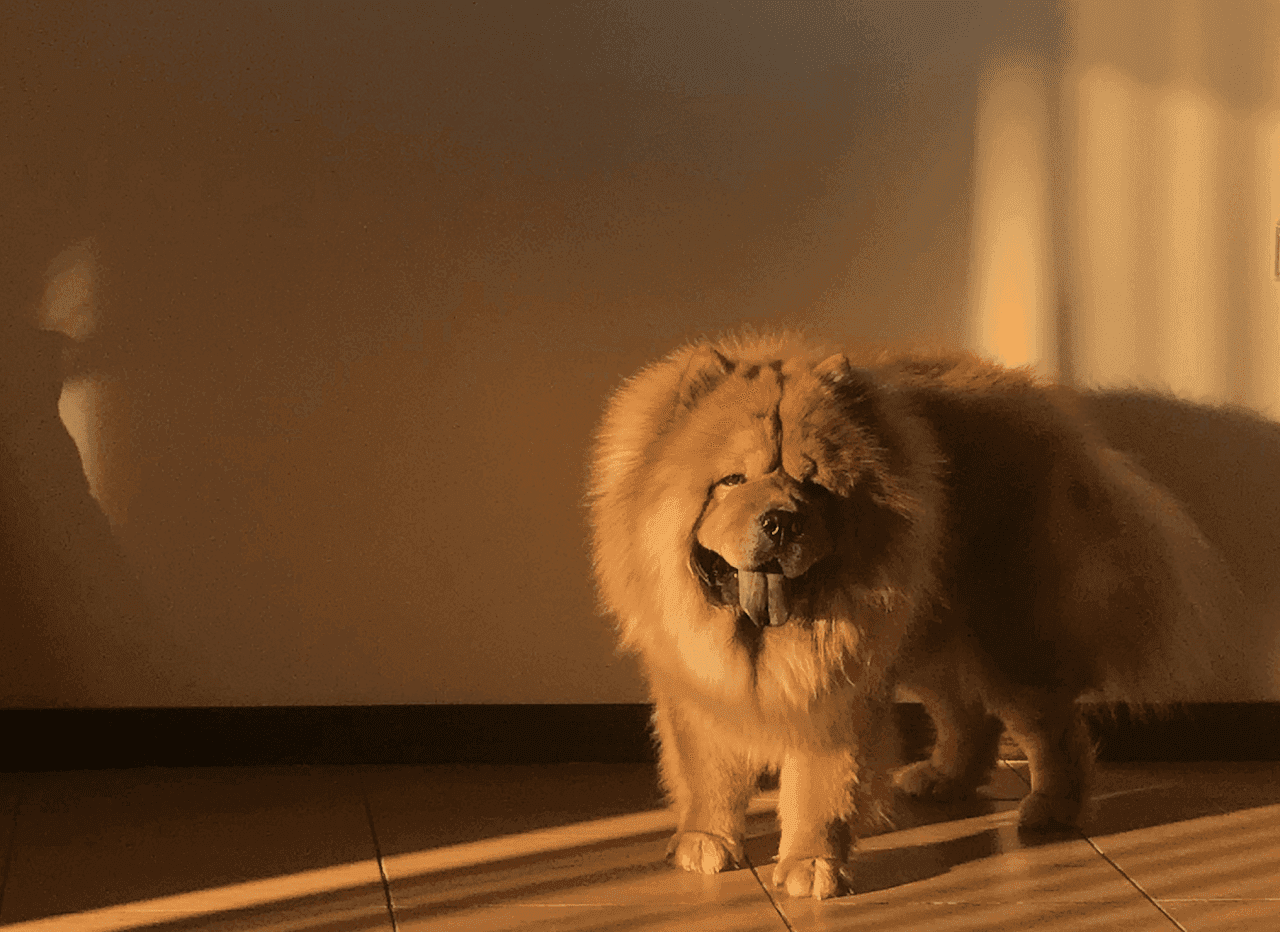
This was another really cute photo of a dog by Martina. I picked this one because of how well they captured the shot using the rule of thirds and taking advantage of the sun’s lighting, making the dog’s fur shine. This made it easy to understand that the texture from the dog’s fur was super soft. Moreover, other than the photo being a bit tilted and out of balance, the combination of colors and palette in this shot was also really great. You can clearly see the harmony between hues, especially orange and yellows.
Clarizza Olivo - “ulap-dagat”
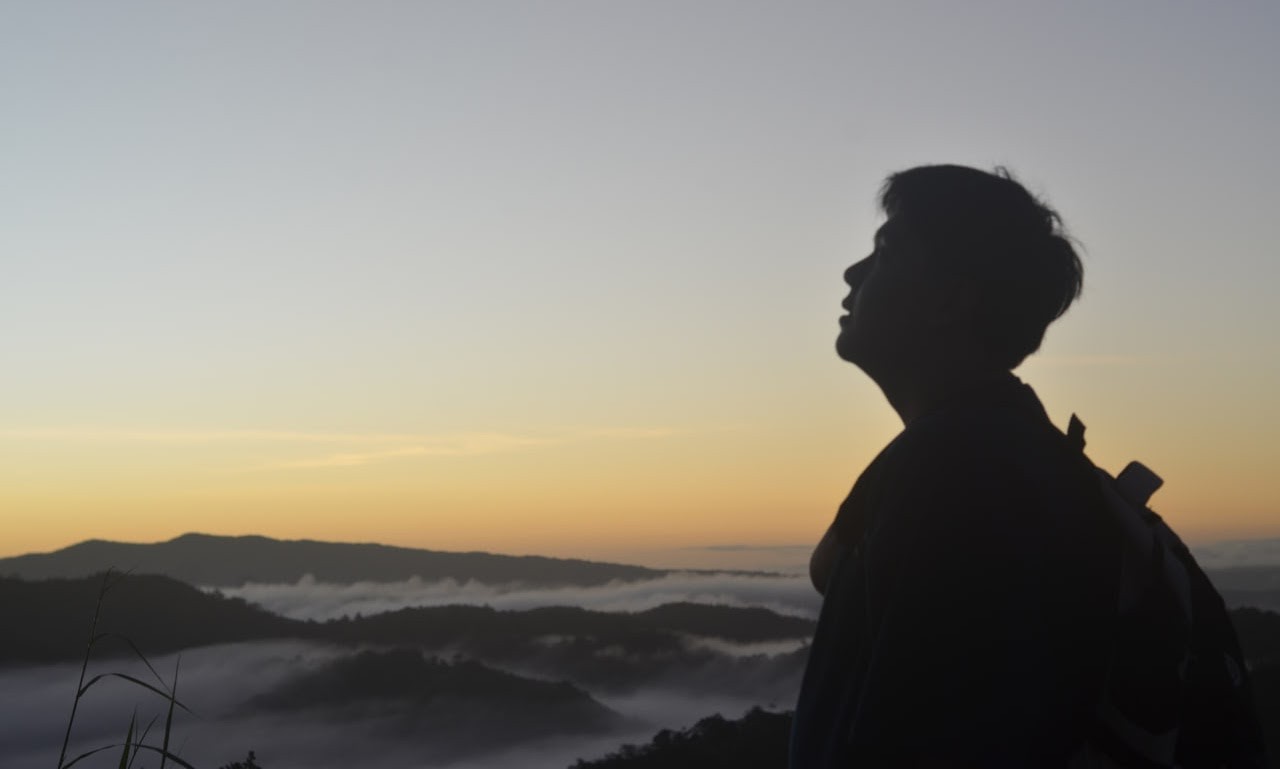
This was also one of the best photos I’ve seen so far. Their use of shadows and proper lighting caught the proper vibe where the proportions emphasized. The mountains looking smaller created an illusion of sub elements that point towards the main focus of the photo which is the person on the very right side of the shot. Though, it would be nicer if they made a larger space for the sky in order to see why the person was looking up in the shot. An example for this could be 70% sky, 20% human form, and 10% mountains below.
John Michael Ocampo - “No Title”
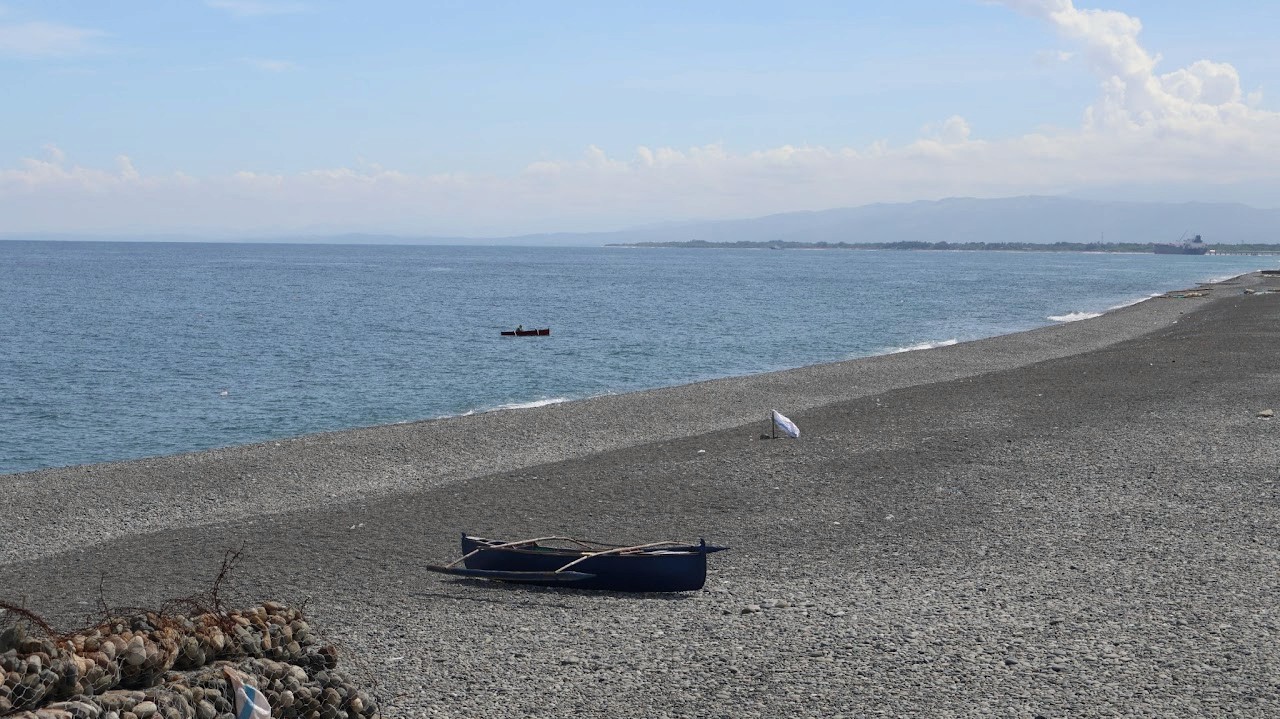
This photo is a great example of parallel and linear composition showcasing a straight horizon and two of the boats being on the same line of sight, with the other looking smaller while the other looks bigger which is another example of the principle of proportion. One more element that is really evident in this photo is texture. Because of the grains that this photo has, you can actually distinguish at a glance that the sand looks rough while the water waves indefinitely towards different sectors of the sea.
Margaux Zhanelle Pajado - “Picture 2”
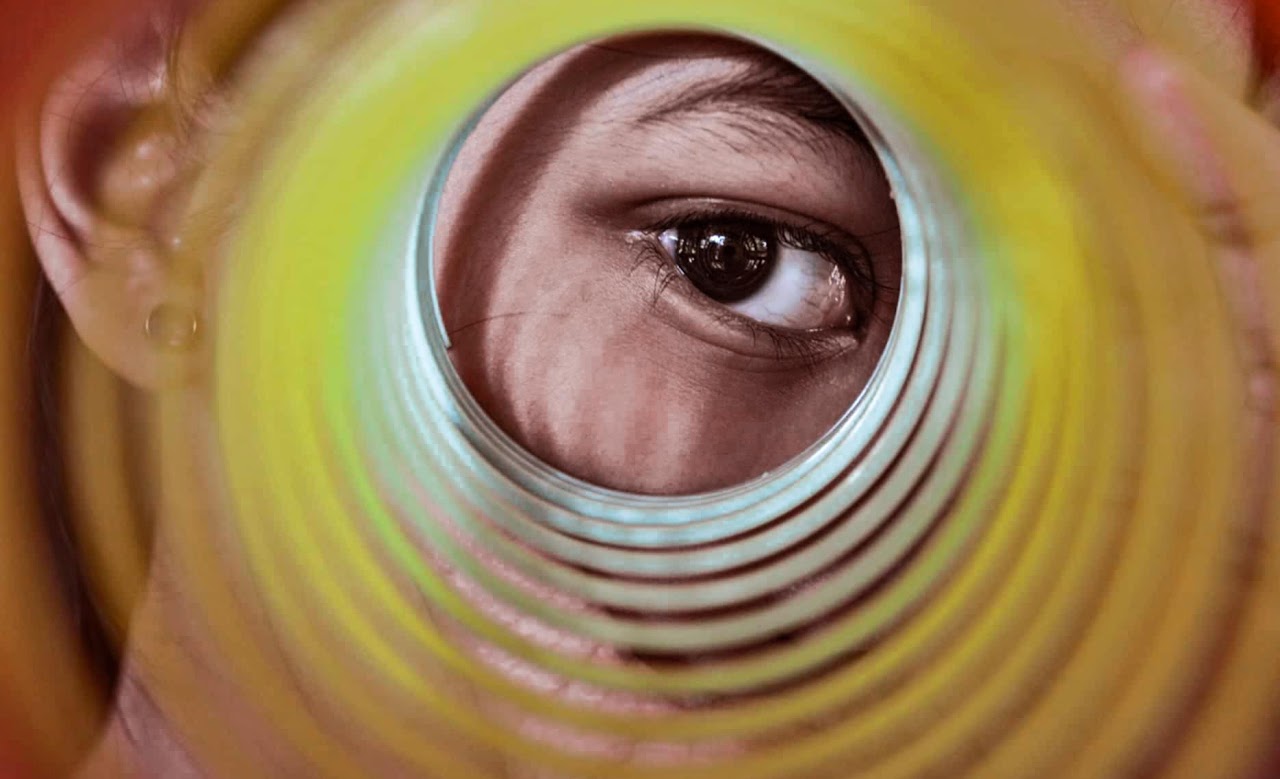
The first thing I noticed after seeing this photo was the eye. I think the sub-elements did great with directing the viewers’ eye towards the main focus of the photo however, it would better if this photo followed at least the golden ratio or the rule of thirds so that it could perfectly fit the center or the side without sacrificing space or wasting a huge gap from the subject and the sub-elements.
Part 3: Self-Assessment
I consider my knowledge about photography to still be at the beginner level. If I were to rate myself compared to the rest of the class, it would be a 7 out of 10 because I have only recently started taking pictures of my daily life and creating stories through it. Back then, I never imagined myself taking good photos nor shooting scenes in my daily life. I’ve never even held a DSLR camera in my life before. But, because of this course, I was encouraged to take the chance to learn and improve another skill. In fact, I think I found a new hobby to be obsessed with. Taking photos gave me so much joy, especially when I make people happy through it. Capturing their real and unedited smiles are the best things I love about photography.
As someone who recently borrowed an 18 megapixel Canon EOS 600D DSLR Camera, I’m still learning how to use its features while being careful not to break it. It’s still hard for me to center shots using the camera and making sure that it isn’t tilted nor too blurry. Using a DSLR camera really is different from a phone camera. Although it’s kind of a hassle to bring about anywhere without the risk of damaging it, it’s really fun to experiment with all kinds of features that it offers, making photography more fun and unique than just point-and-shoot cameras like the ones we commonly use through a phone.
Since I still have so much room for improvement with my photography work, there’s only one way for me to go. Forward. To continuously practice and learn different techniques will help me understand how a camera works better. Hopefully, in the future, I’ll be able to afford a camera of my own which I can bring anywhere and capture shots I’d like to last for a long time without the hassle of manually transferring files using a flash drive or a memory card reader.
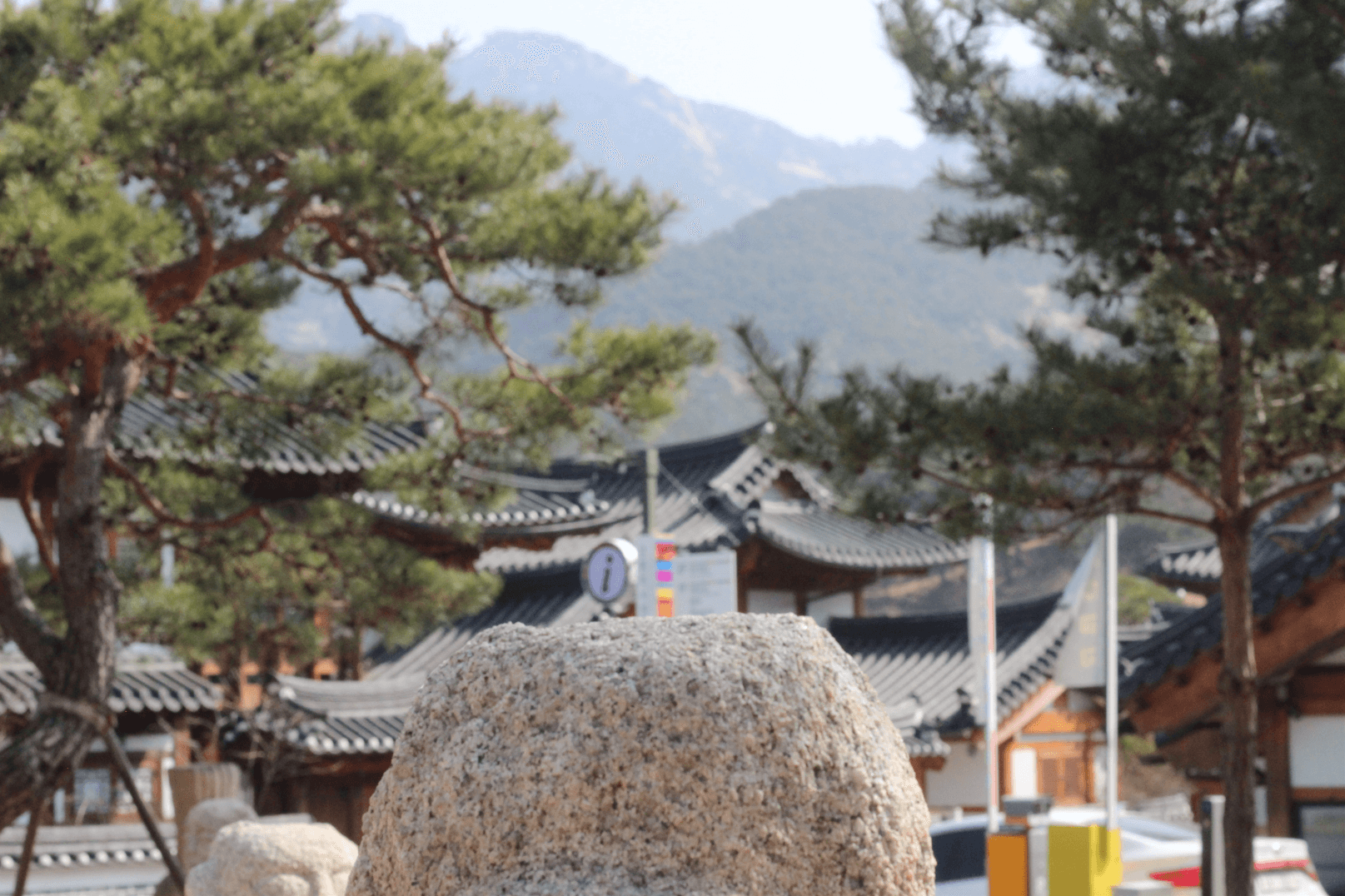
Divergence
Height
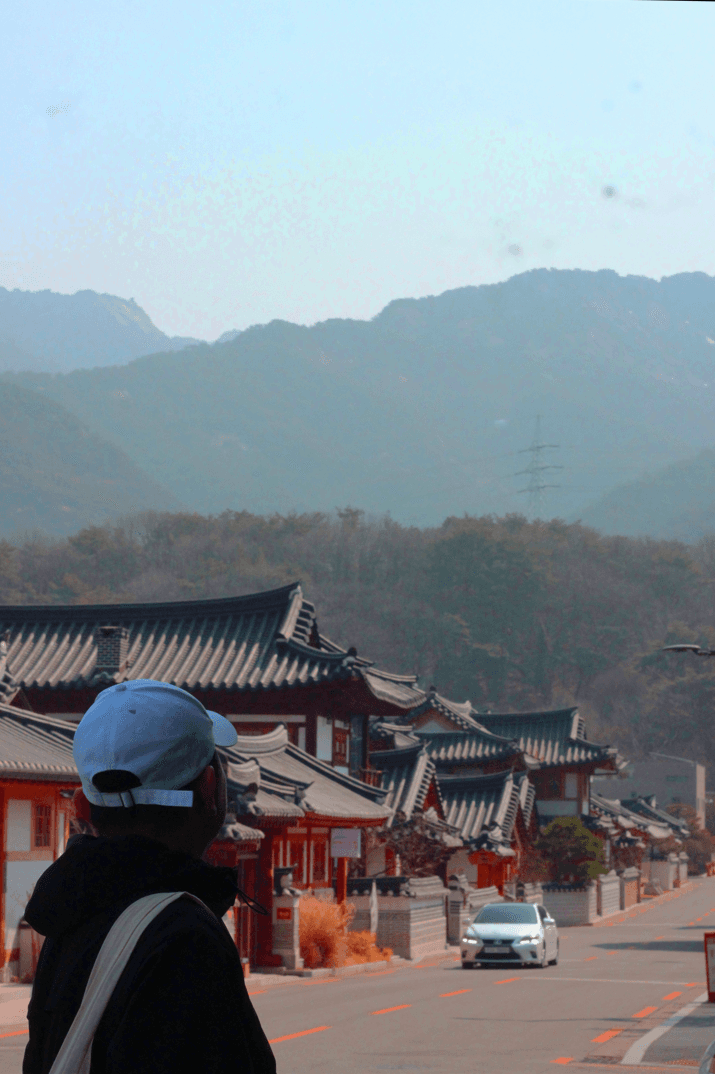
This was a photo I took when we were in Seoul, South Korea recently this March. There’s not much of a story behind this picture but it inspired me to take the shot because of my dad who was looking in awe on the mountains from afar. Seeing this photo once again, I realized there were depths visible in the picture —the closer the subject was from the camera, the darker it was, and the farther and higher it is, the lighter it gets. Although I know that a lower ISO is recommended to use in brighter areas, I used a higher ISO to fill up the darker gap from using a higher shutter speed (I was experimenting with my camera settings by this time, and I had little time to change to lower shutter speed). Moreover, I also noticed that I had my aperture at a higher number, so the lens is letting in smaller bits of light. I had to do this; else the photo will be brighter due to higher ISO.
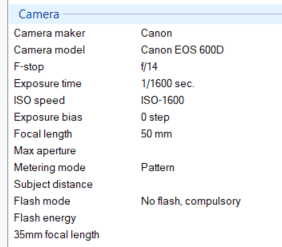

Date & Image Details
It took me too late to realize that the camera's time wasn't properly set. This photo was taken during morning (around 8 AM) according to the similar photos I had on my phone.
Hall from the Sky
Pattern
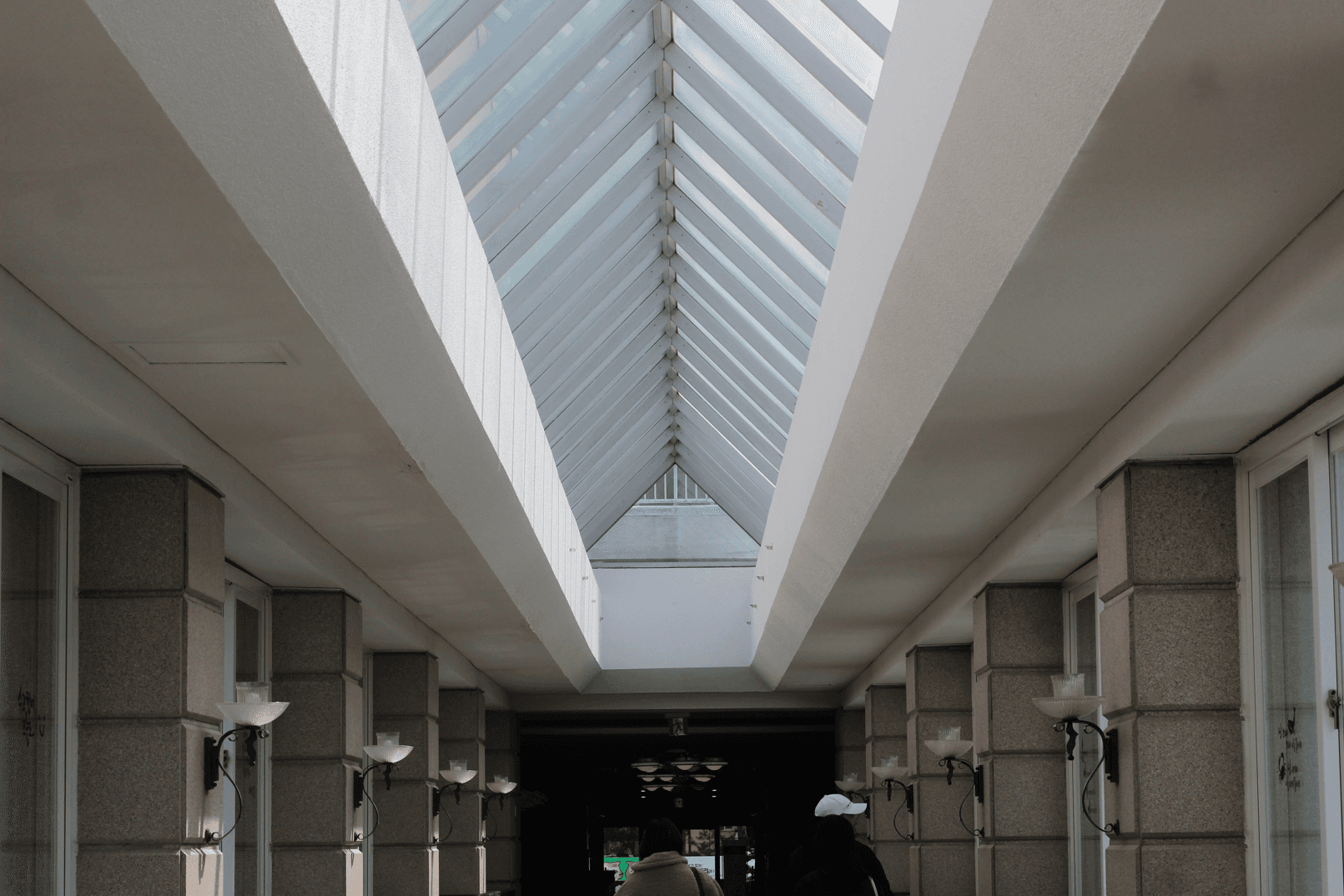
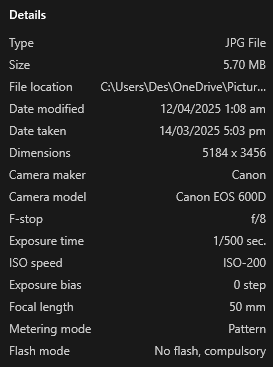
The symmetrical pattern of the lamp and the windows on the ceiling of this hall was majestic, especially in person. This photo was taken inside the Tower Condominium of Mona Yongpyong (Pyeongchang, South Korea) while we were walking towards the front desk lobby of the hotel. There was enough light inside the hall so I used a bigger aperture in order to let the natural light into the camera while lowering the light sensitivity of the camera (ISO). Moreover, we were walking while I was taking this shot so I had to make the shutter speed faster in order to keep the photo clear without blurring the background.
Real Time Taken: 11 AM
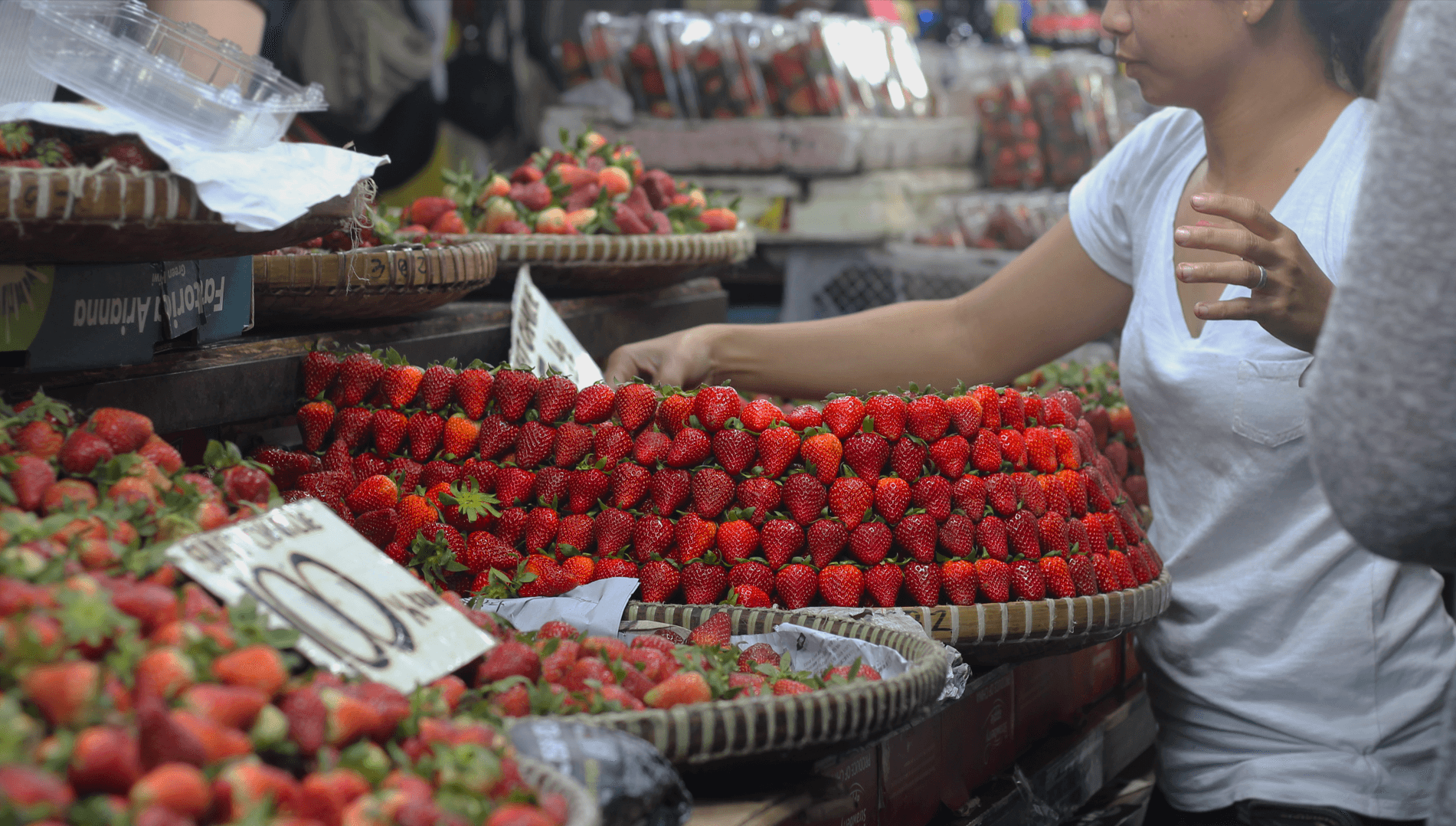
Here is another extra photo which I really liked while I was capturing anything with patterns during our Baguio trip. The way that the strawberries were symmetrically aligned was so satisfying to see. Though, I had to modify it a bit with Photopea in order to highlight the theme.
Baguio Cathedral
Night
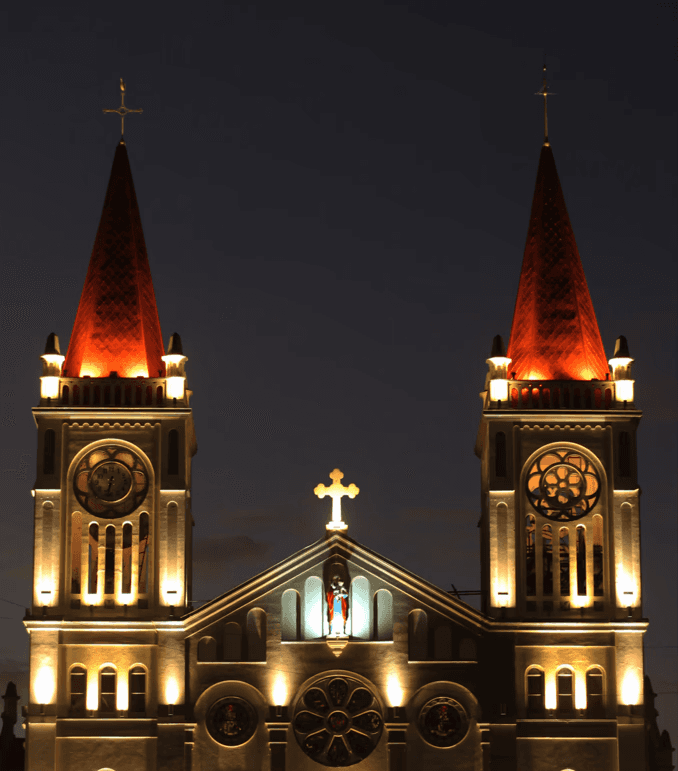
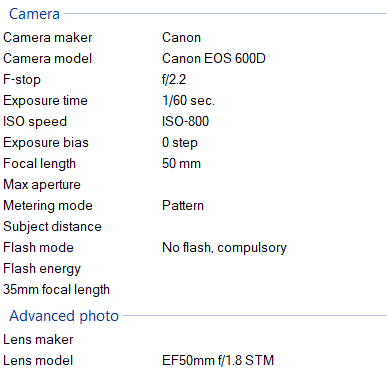
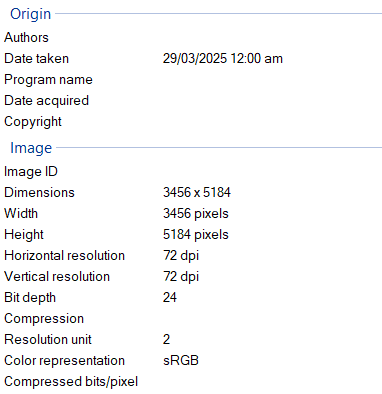
Seeing the Baguio Cathedral’s structural composition and lighting during the night was something else. Though, I wish I had more control over my camera in order to shoot good photos even if it’s dark because it was still a bit of a challenge for me to find the right recipe and combination of the 3 camera settings in order to show the lights from the cathedral properly while still keeping them aligned and steady. Since it was dark, I had to use higher ISO and lower shutter speed since my subject wasn’t moving. I also tried to use a smaller number for aperture in order to allow more light into the camera since I needed all the brightness I could get. Without it, the photo will just turn dark with small particles of light or none at all. After countless trials and errors, this is the best night photo I could get from the cathedral. I edited it using photopea in order to crop unnecessary objects in sight and level the angle accordingly.
Camera Settings
Real time taken: 6:43 PM
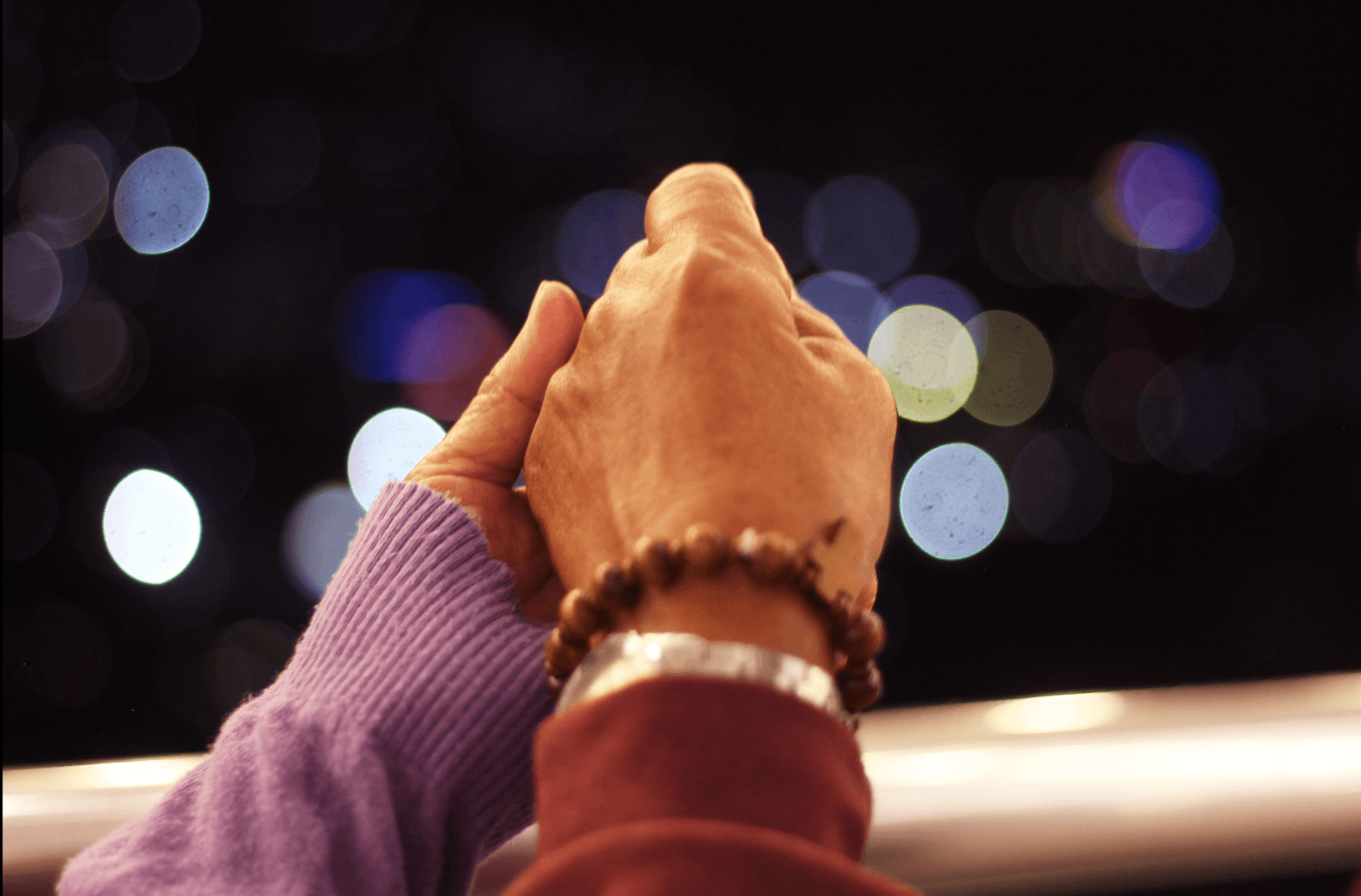
This is another photo I took during a night walk with my grandparents. They were holding hands while looking over the view from the terrace. It was a really sweet moment so I'm glad I managed to capture it.
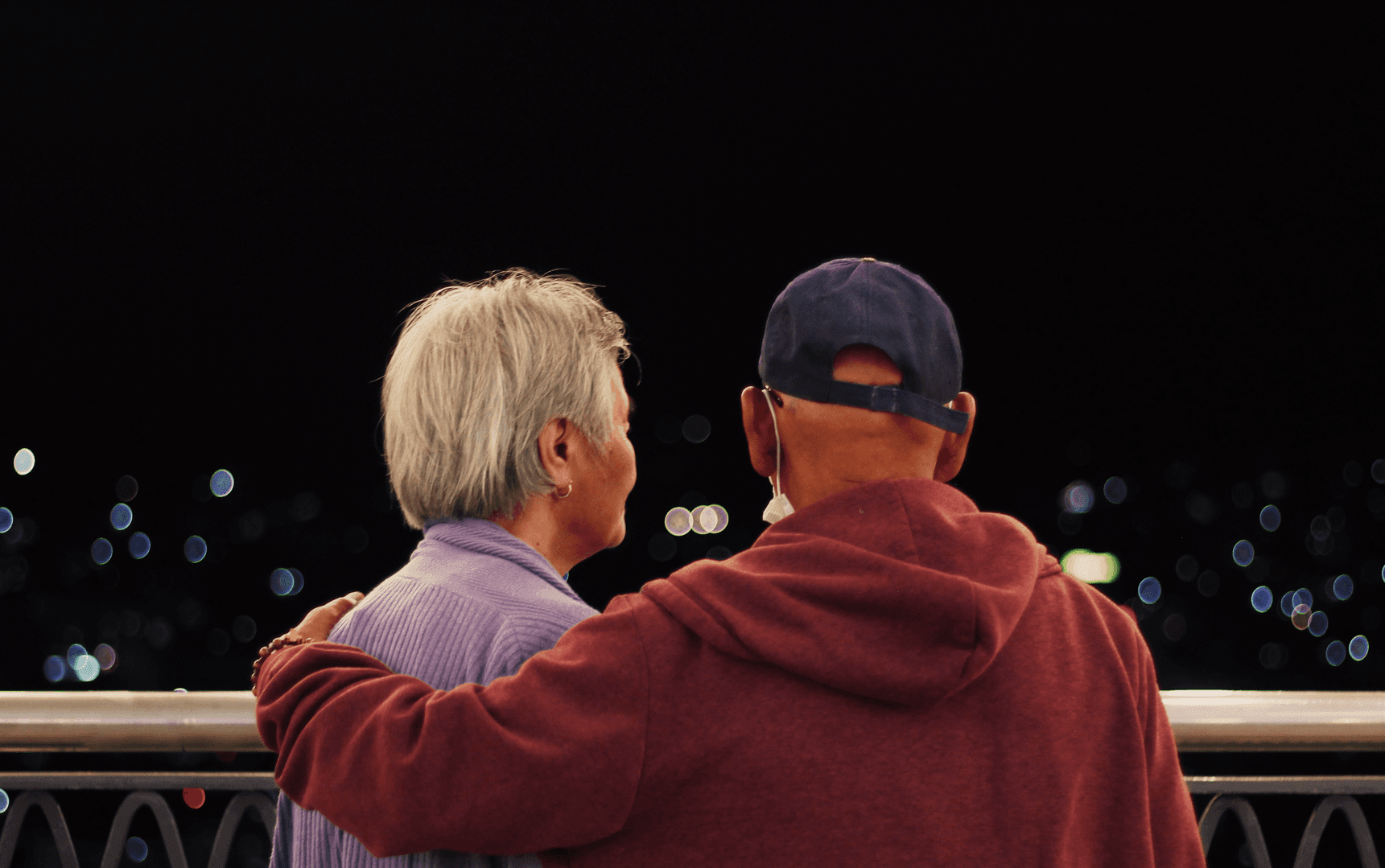
We were resting by a bench nearby when I saw this scene from my grandparents. It really looked like a scene from k-drama, erasing the fact that my grandfather awkwardly hung his arms to my grandmother's shoulder. They were really funny and cute. Truly, a night to remember.
In The Midst of the Crowd
Flower
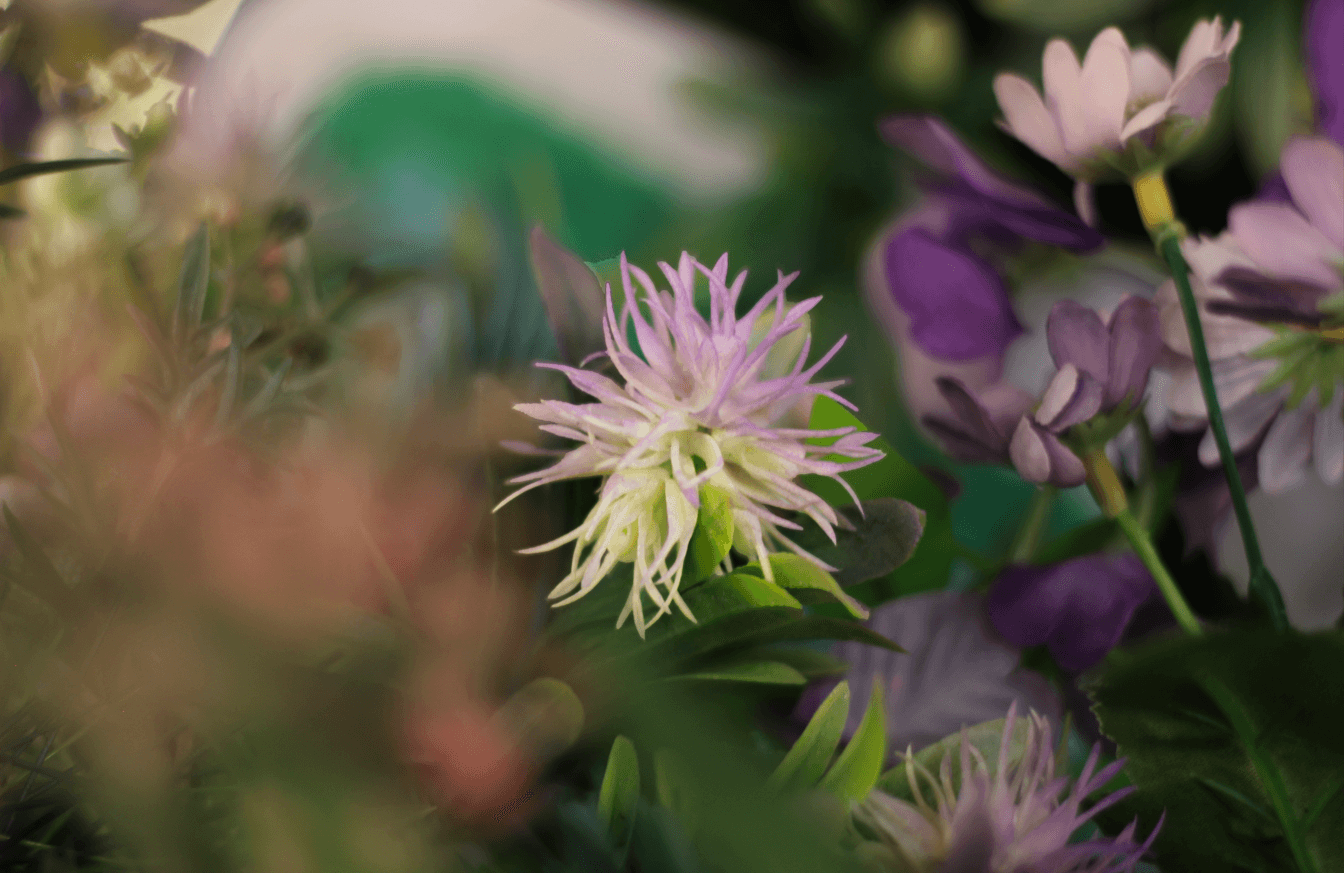
This was also a photo that I took during our recent Baguio trip. It piqued my interest because it was the first time I saw a flower that looked like dandelions but much thicker and bigger in comparison. These flowers were decorated on the very top floor of SM Baguio. I managed to capture this flower in focus using my 50mm lens and since there was enough light from the mall, I just used the usual ISO speed of 200. I was also experimenting with camera settings this time around so I was using a bigger aperture than recommended in order to allow better separation between my subject and the background. Since my subject isn’t moving for this photo, I set a slower shutter speed so it can capture the details without sacrificing the brightness of the photo.
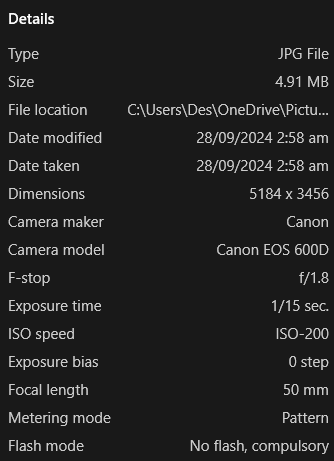
Real time taken: 8:46 PM
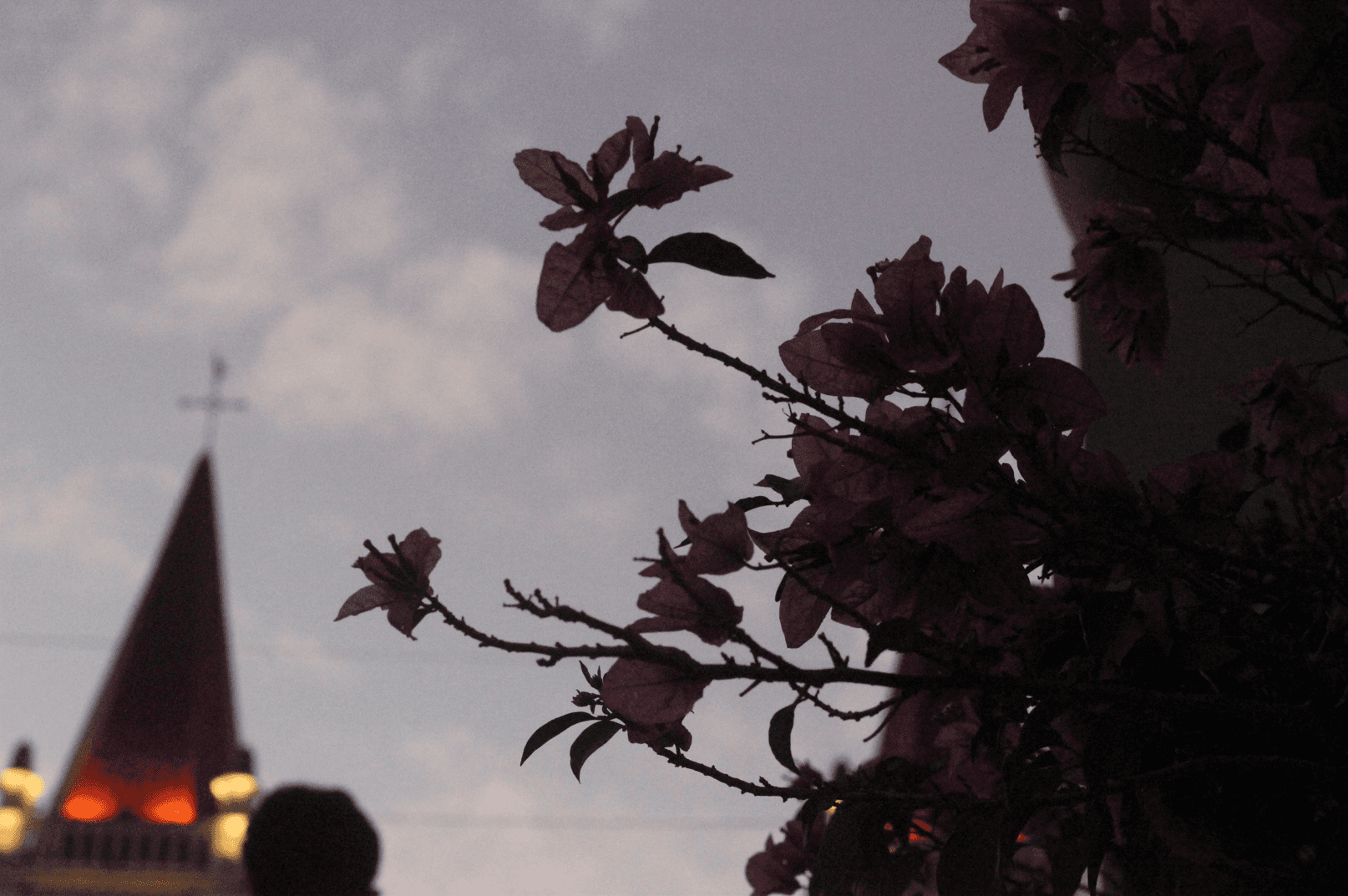
An extra photo of flowers I took near the Baguio Cathedral. I loved how the branches looked like it was aiming something above from this angle.
Man-Made Falls
Motion
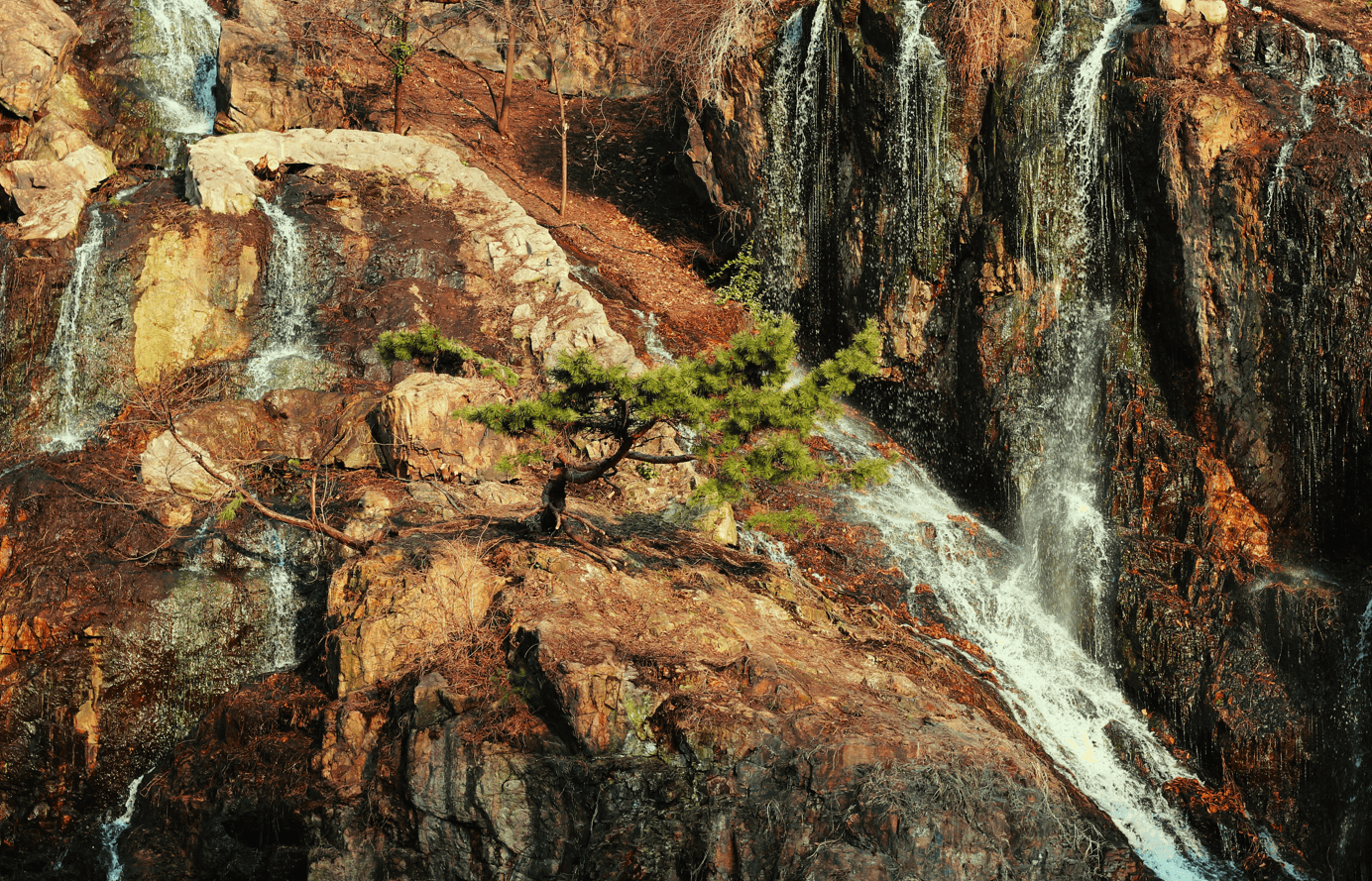
This was my first time trying motion photography with moving water. The very moment I saw this man-made falls near a cafe in Seoul, I knew I had to capture this magnificent view. It was really hard for me to import this specific photo because of how large it is, so it might be a bit grainy and pixelated viewing through this site alone (well, I think most of the photos I uploaded here significantly lost their quality due to uploading restrictions) but I suppose the overall composition and movement is still noticeable. Due to shutter speed constraints, I was only able to shoot at 1/250th of a second in order to catch the movement of the water without completely blurring everything. I tried making it lower but it was hard for me to balance the camera without a tripod so my only option was to make a clear shot. Since there was enough room for sunlight from the back, I set my ISO to 200 and allowed mid-light to enter the camera.
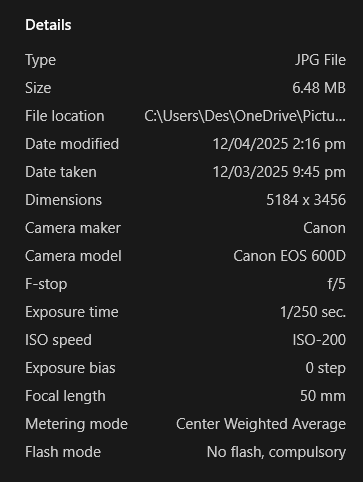
Real Time Taken: 5:24 PM